Every call answered.Call center software for Ethiopia
Halo answers your callers or turns missed calls into callbacks, and alerts your supervisors when too few agents are ready. Built in Addis Ababa for Ethio Telecom SIP lines and Amharic voice menus.
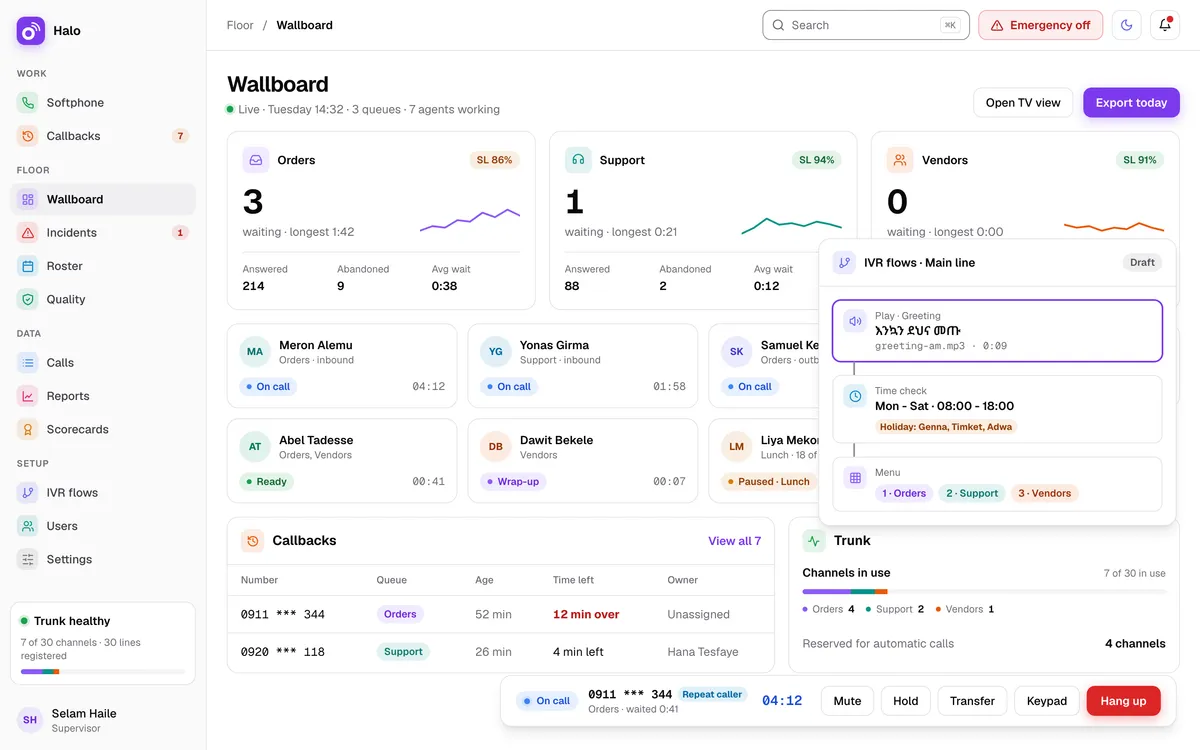


Used by klik, the Addis Ababa delivery company.
What Halo does
Never miss a caller
Every part of Halo is built around one promise: your callers are answered, or called back.
Queues that keep callers informed
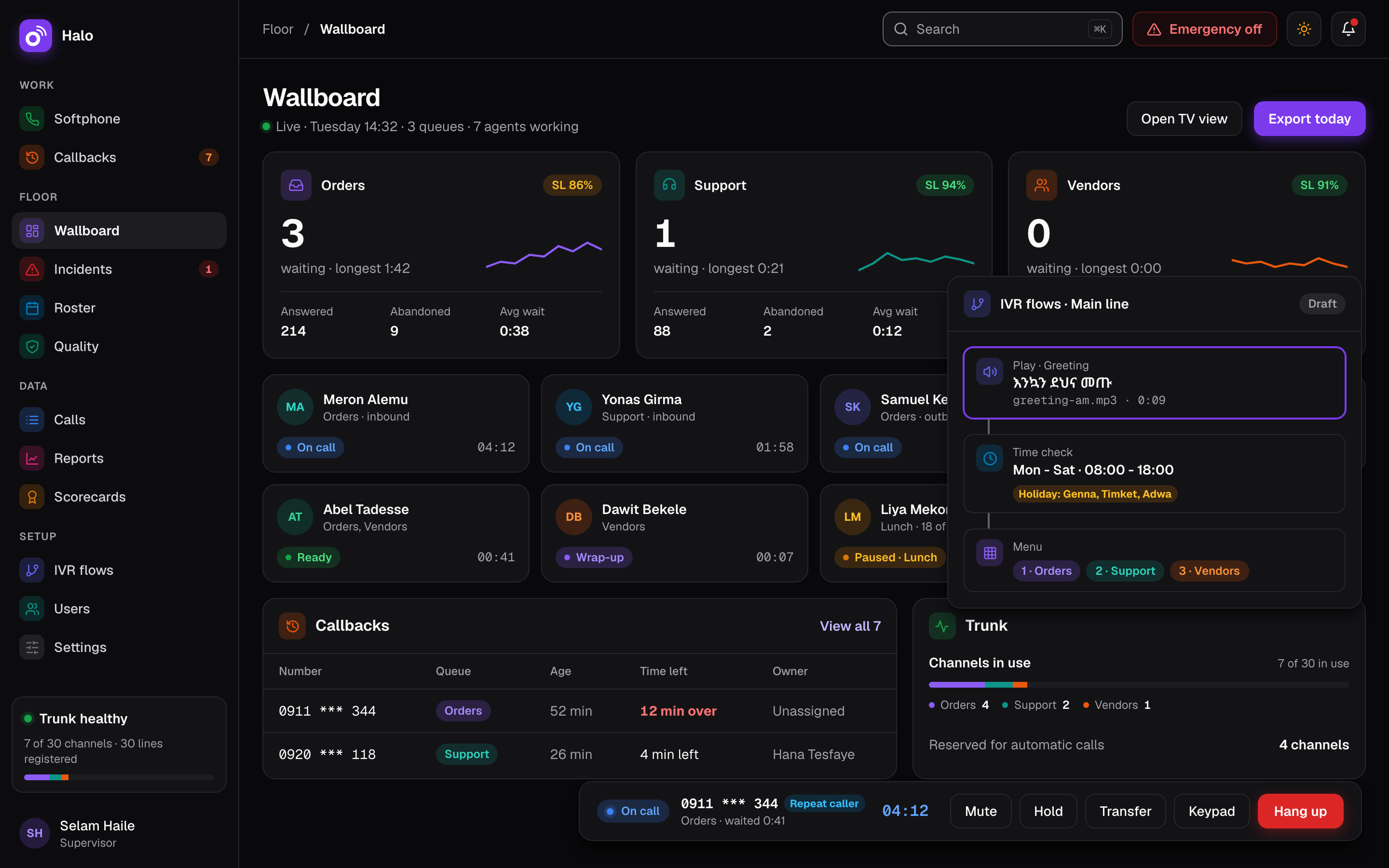
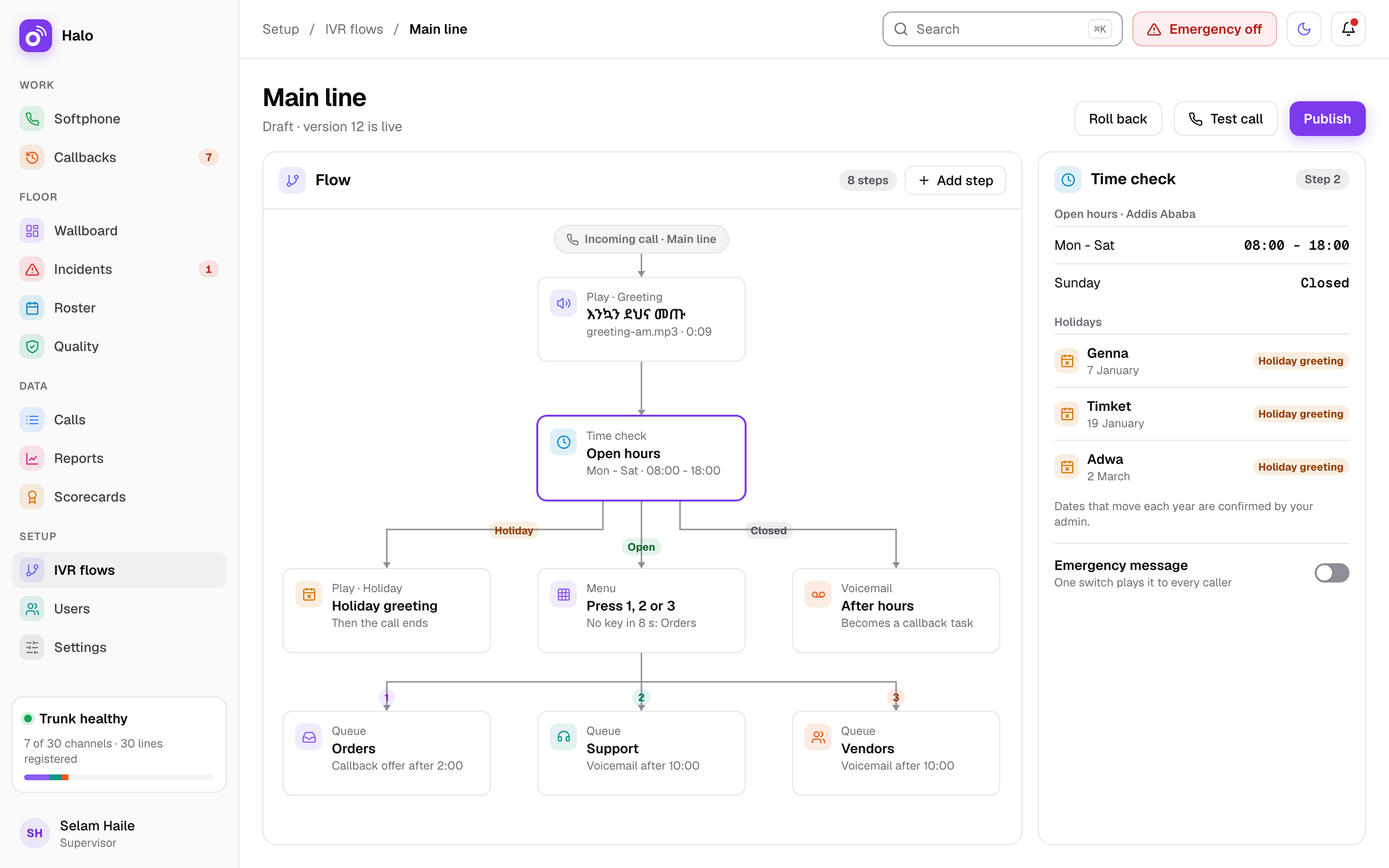
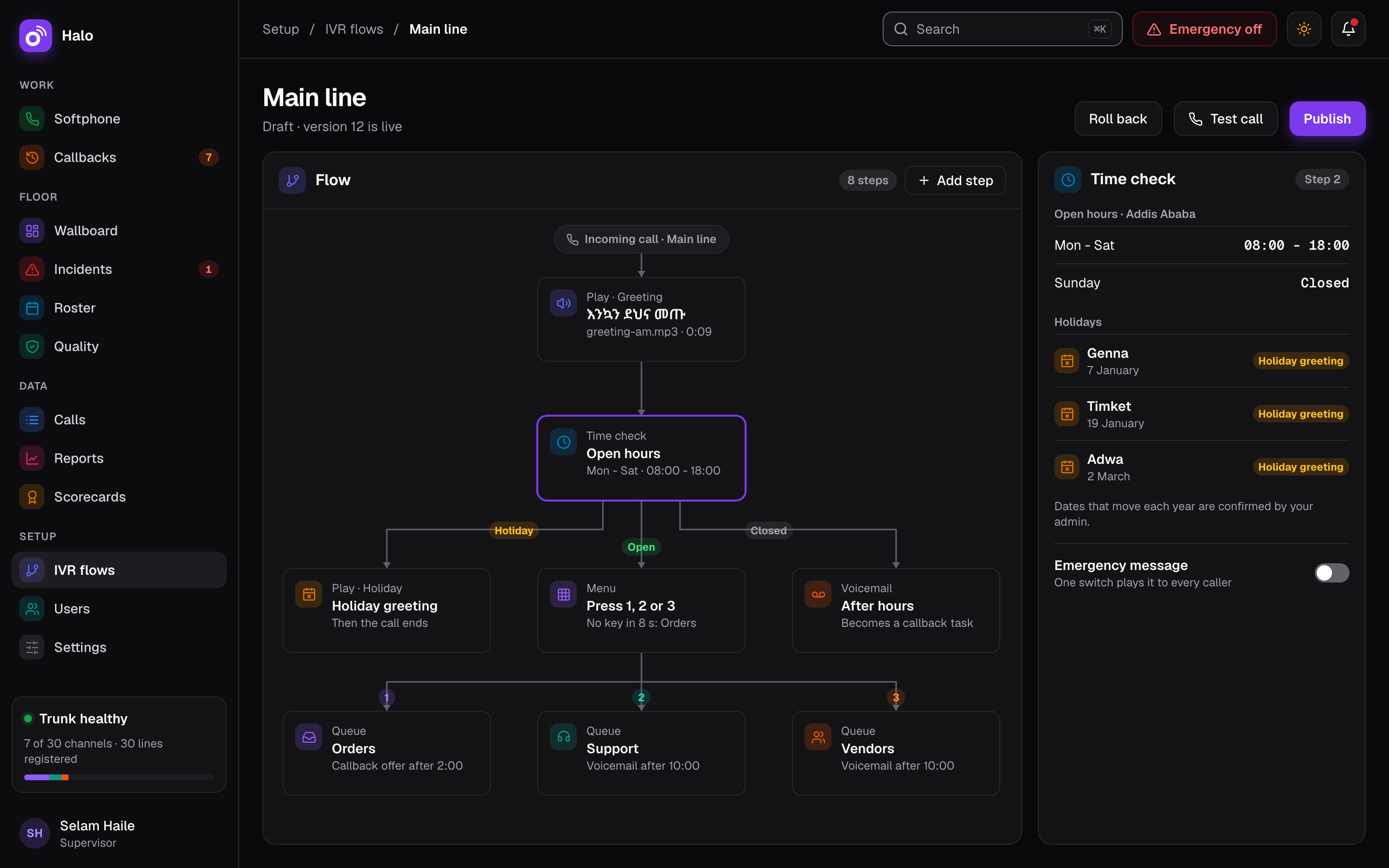
Callers hear their place in line, VIP callers go first, and a busy queue can offer a callback instead of a long wait.
How call queues work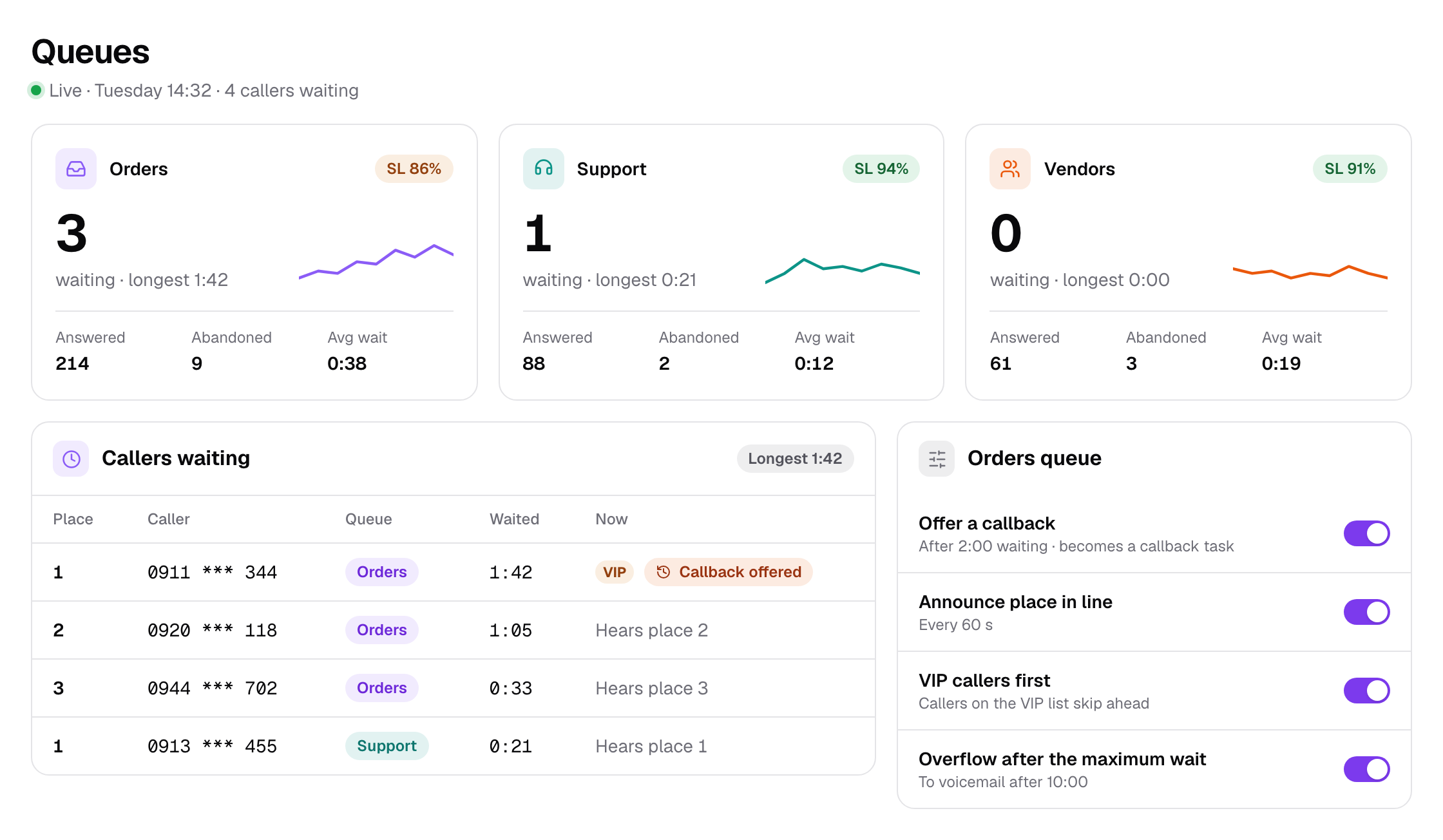
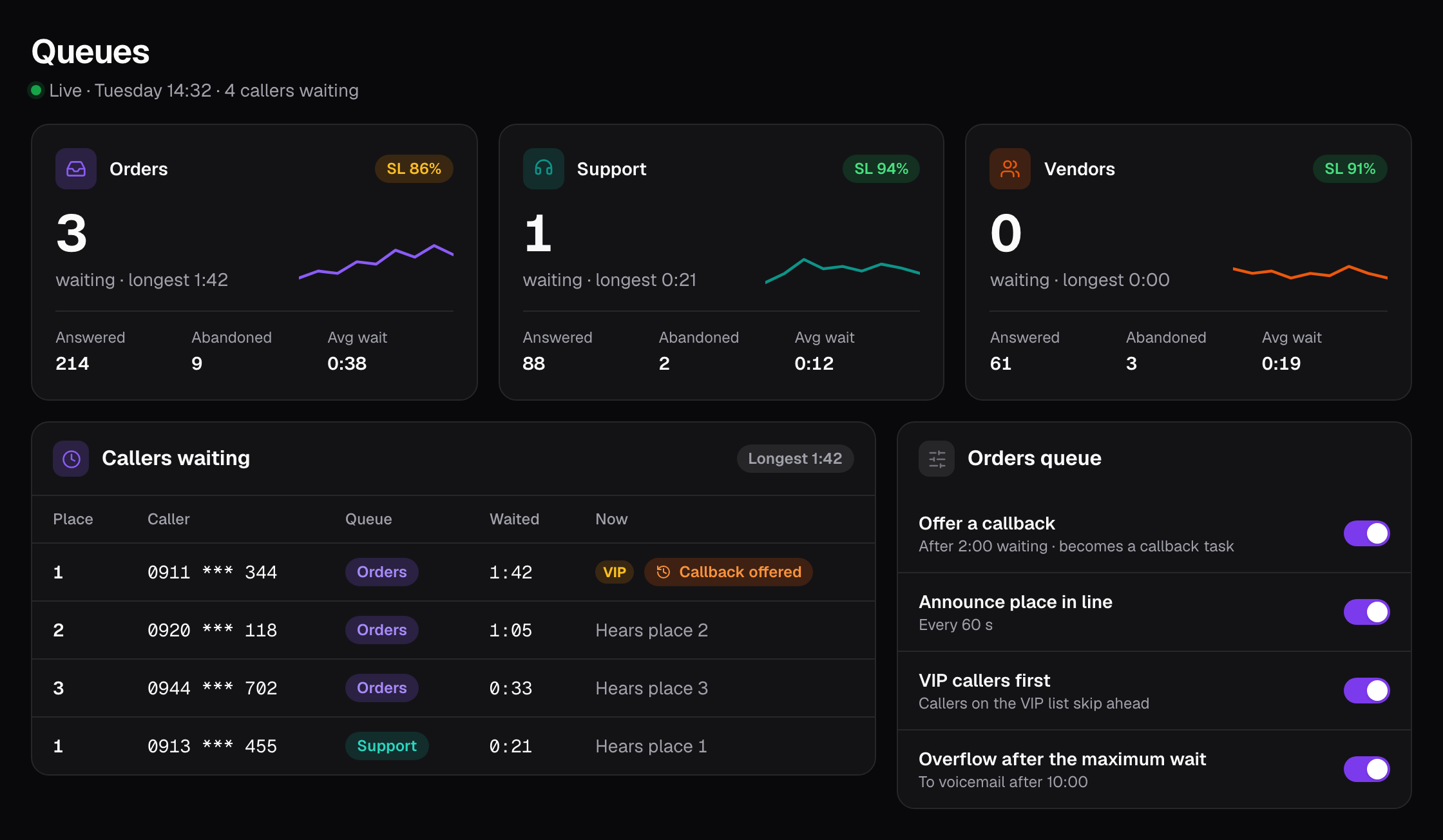
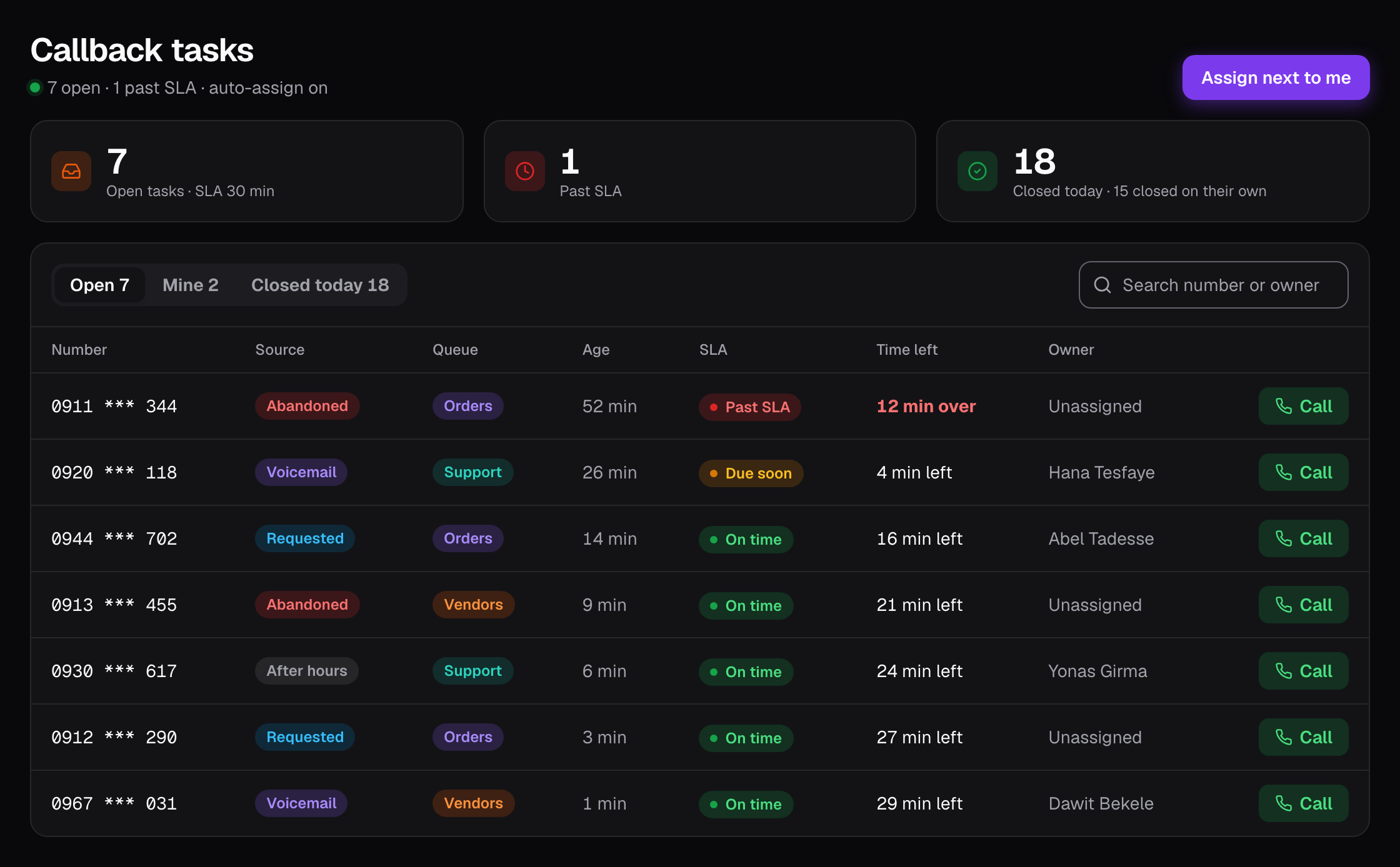
Missed calls become callback tasks
Callers who hang up while waiting, voicemails and callback requests land on one shared list. A task closes itself when the customer is reached.
How callbacks work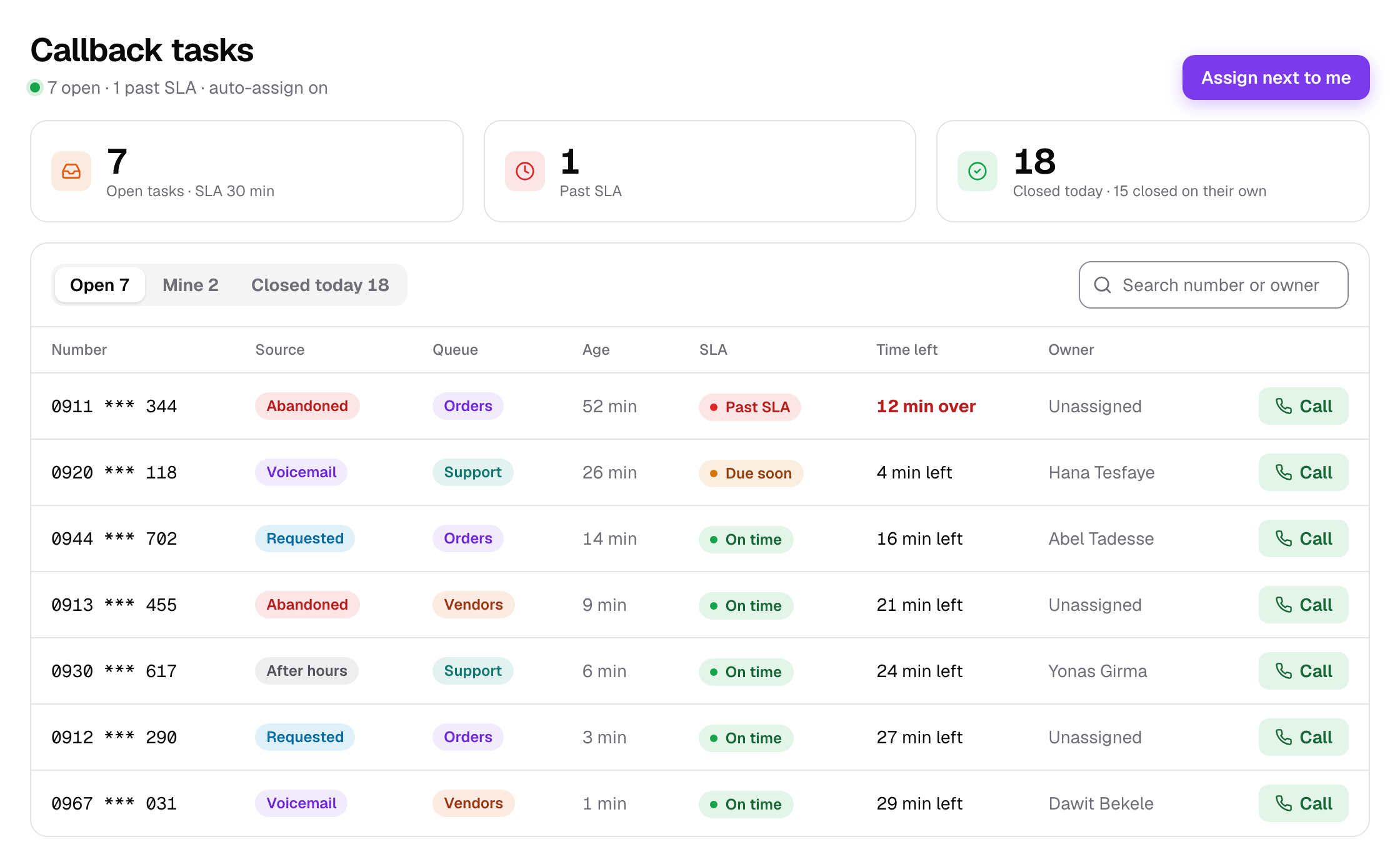
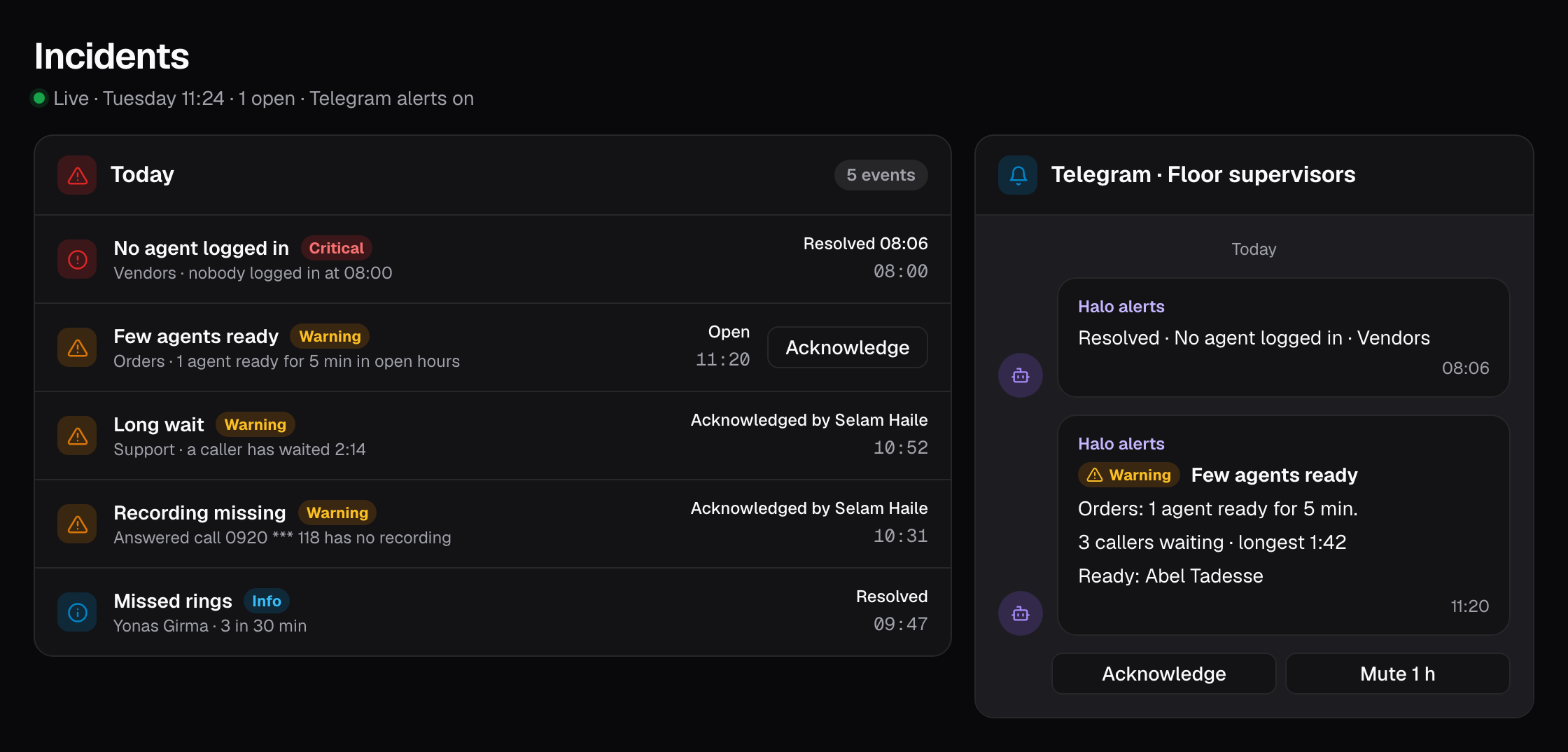
Alerts when too few agents are ready
Supervisors get a Telegram alert when fewer than 2 agents are ready in a queue for 5 minutes in open hours, and a critical alert when nobody is logged in.
How alerts work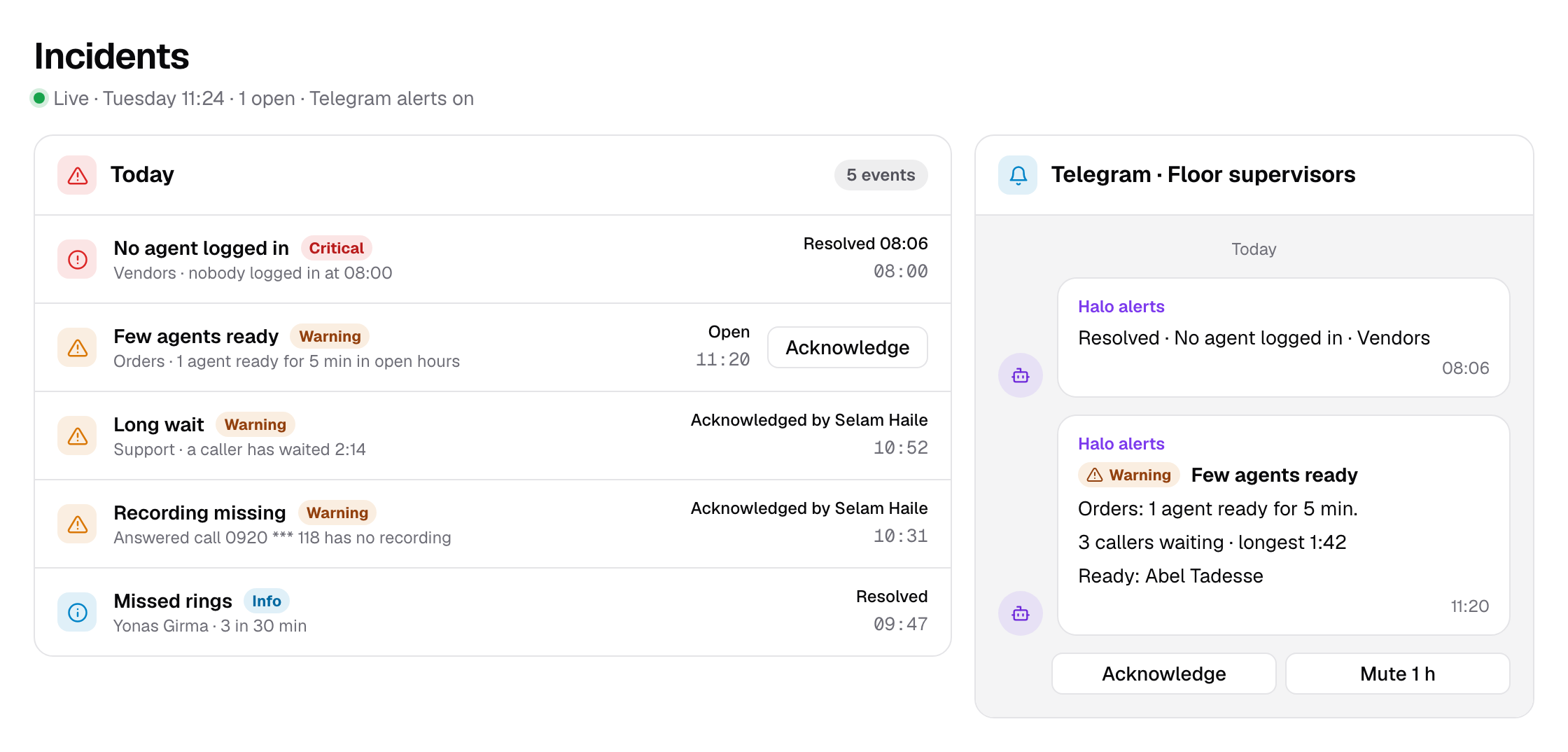
Made in Addis Ababa
Built for Ethiopia
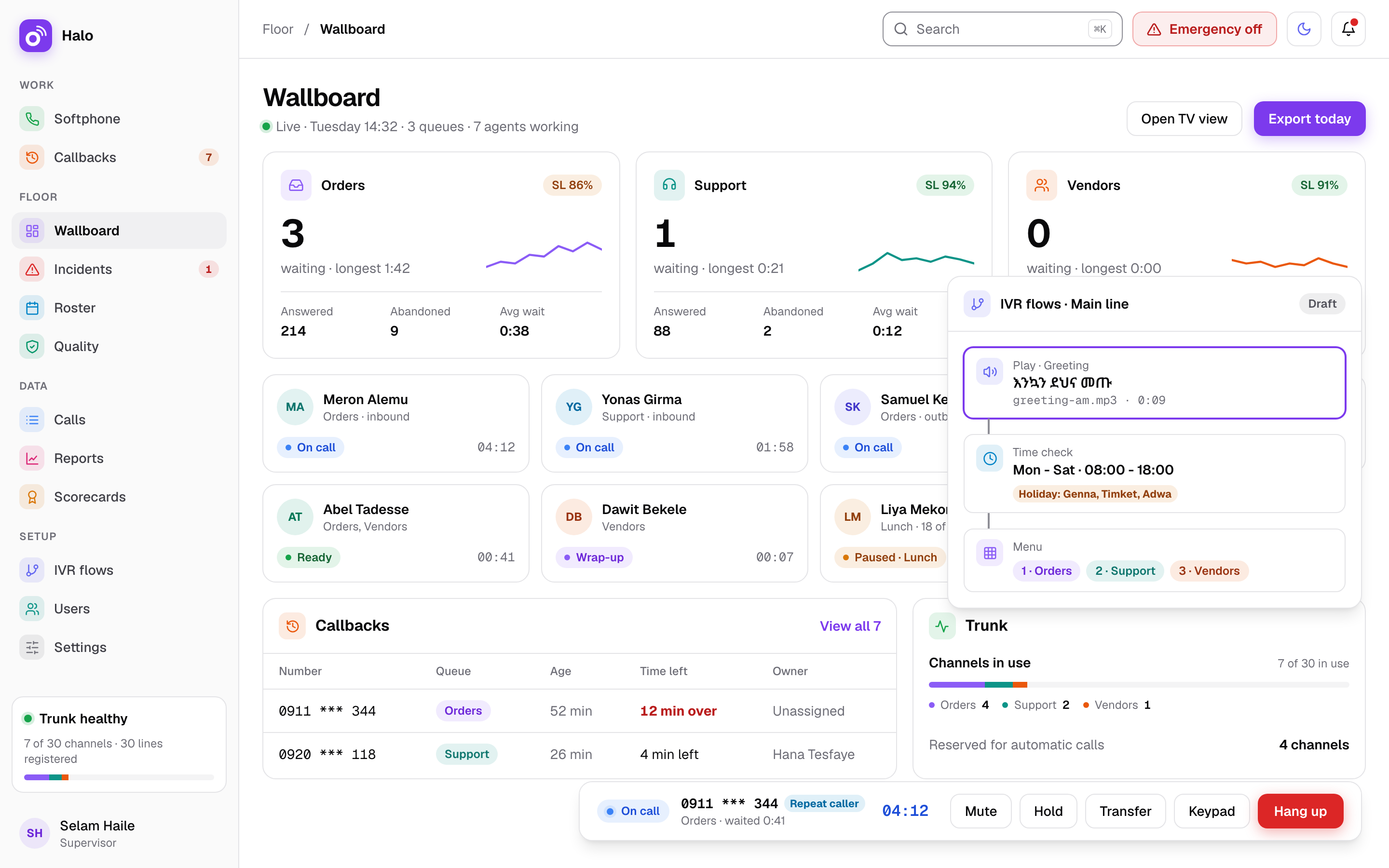
Made in Addis Ababa for Ethiopian lines, languages and working days.
One system
One call center system, not five tools
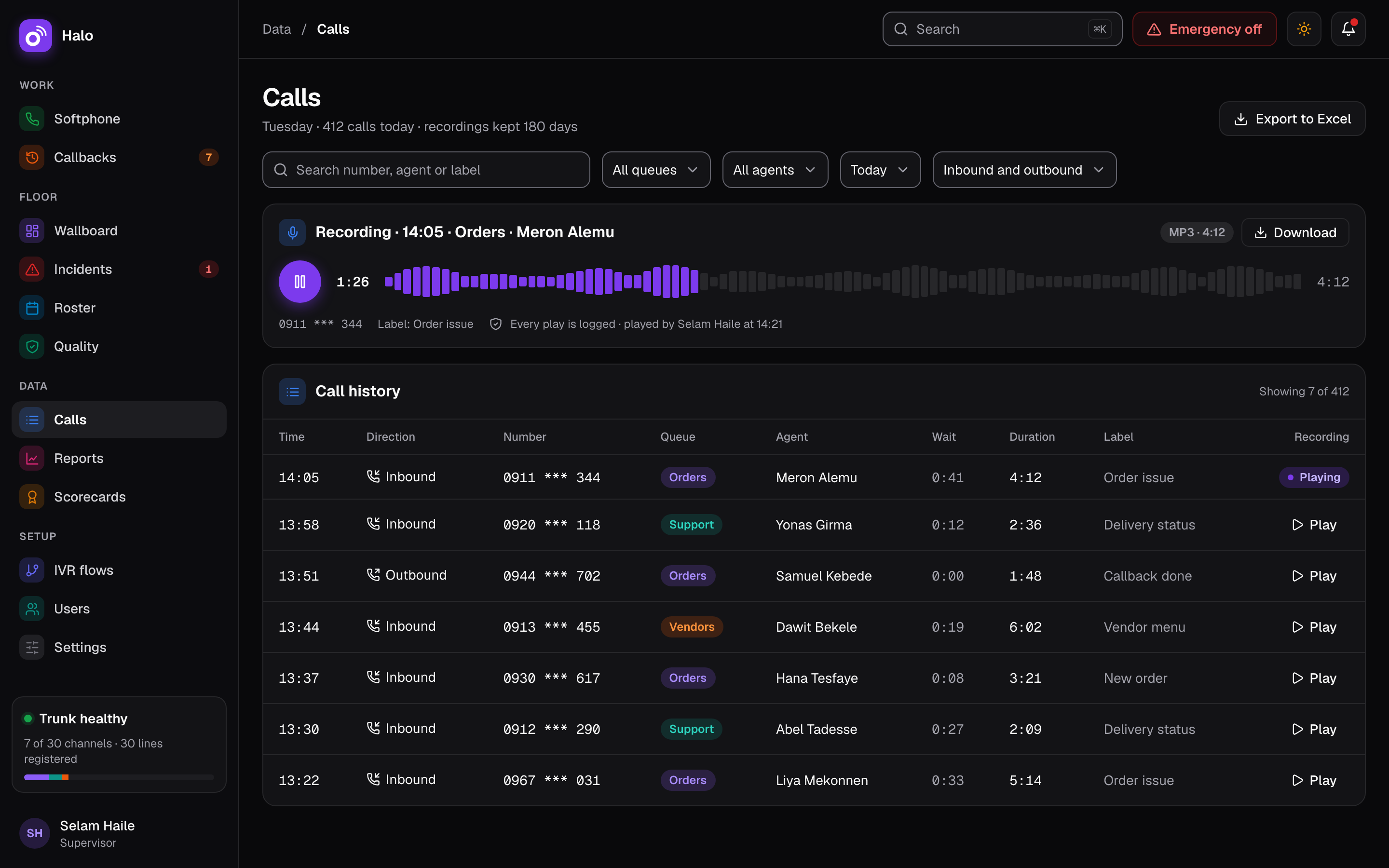
One call center solution covers phones, voice menus, queues, callbacks, recordings, the wallboard, shifts and reports. Some call it a contact center. Halo is one system for the whole floor.
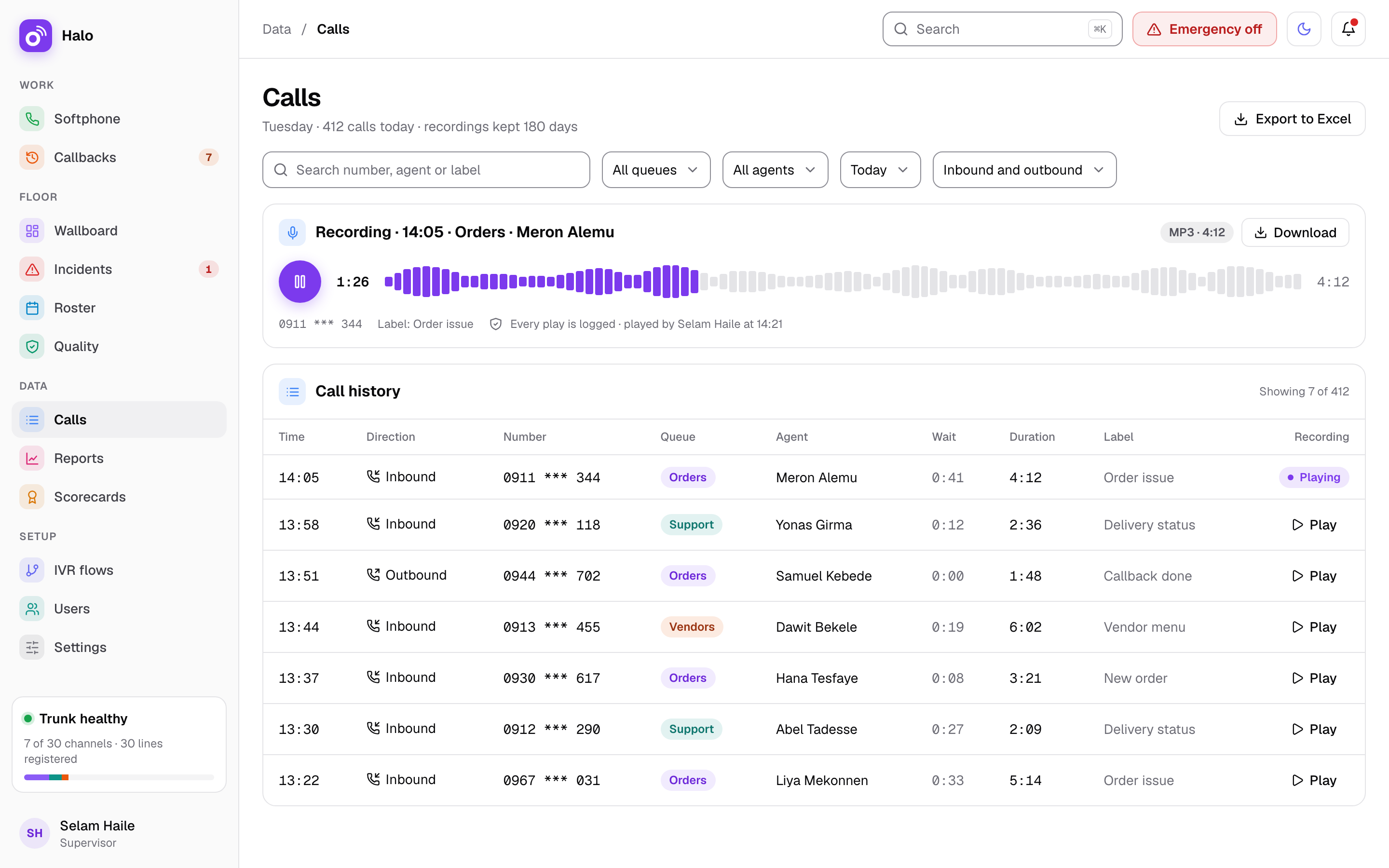
Within 2 s
changes show on the wallboard
- 30 days
- Halo keeps working if the licence server cannot be reached
- Up to 100
- agents
- 4 vCPU, 8 GB
- the starting server
How it works
- We install Halo on your serverYour own server or one from Skynet.
- We connect your Ethio Telecom line and build your first menuQueues, users and hours too.
- Your team trains with us in Addis AbabaAdmins, supervisors and agents.